With the advent of a growing scientific field of study called nutrigenomics, the old adage “you are what you eat” is proving to be much more than folk wisdom. Nutrigenomics takes into consideration the relationship between diet and genetics, and identifies the beneficial or detrimental health effects of various dietary components. What researchers have discovered is that there is far more to dietary health than proteins, fats, and carbohydrates, and that simply meeting the minimum daily requirements for vitamins and minerals isn’t enough for optimal health and disease prevention.
Improve Your Health With Black Pepper
Although it’s often said, “You are what you eat,” it’s more accurate to say, “You are what you absorb.” You may be eating a perfect diet and taking handfuls of supplements, but if you aren’t absorbing what you’re consuming, your body won’t have the raw materials needed for energy, maintenance, and repair. Without proper absorption and assimilation of nutrients, health problems inevitably arise.
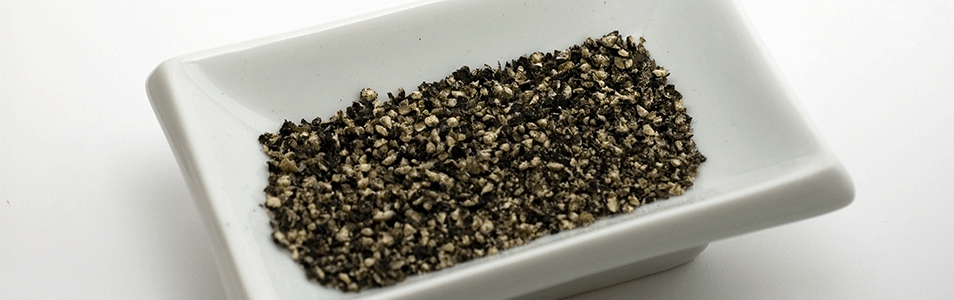
One of my favorite botanicals for improving digestion and absorption is black pepper (Piper nigrum), which is the dried fruit of a flowering tropical vine. I find it interesting that black pepper plays such a prominent role in our cuisine, and that so many of us enjoy grinding fresh black pepper onto our food at the table. Along with adding flavor to our plate, we’re taking advantage (perhaps intuitively) of the health promoting benefits of this ancient spice, which include the ability to enhance the absorption of many of the medicinal nutrients in food. Although black pepper is well established in Western cuisine, the use of the spice originates in south India, where it has been appreciated for thousands of years not only for its culinary appeal, but also for its myriad health benefits.
You Can Reduce Your Risk of Cancer
The recent detailed U. S. national report on cancer (released every two years) revealed that despite the billions of dollars poured into cancer research and innovative treatments, current approaches are not delivering on their promise of a cure. In fact, progress against the disease is excruciatingly slow, and much of the decline in cancer deaths in the U. S. is the result of decreases in smoking, not cutting-edge technological treatments.
After 25 years of research and working with thousands of people with cancer, I am convinced that the search for a “magic bullet” that will cure or eradicate cancer is misguided. As long as we continue to focus primarily on eradicating cancer, we are missing the bigger picture—the terrain in which cancer evolves.